
Sewage
Sewage Backup in the House: Is It Safe to Stay?
By Hydrosphere Restoration ProsUpdated 8 min read
The short answer
Usually not in the affected rooms. Sewage is Category 3 black water that can carry bacteria, viruses and parasites. Keep children, older adults, anyone pregnant or immunocompromised, and pets away, or out of the house if the backup is large. Stop using water, turn off HVAC that pulls air across the area, and call (831) 303-1192.
Is it safe to stay in a house with a sewage backup?
It depends on how much came up and where it went. A toilet that spilled onto a tile bathroom floor is a different problem from a downstairs shower that pushed sewage across carpet into two bedrooms. Either way, the restoration industry’s water damage standard, IICRC S500, treats sewage as Category 3, the most contaminated class of water.
Category 3 water can hold E. coli, norovirus, hepatitis A and parasites. People get sick from touching it, tracking it through the house, breathing droplets when it splashes, and from wet materials that keep growing bacteria for days. How bad it smells tells you very little about how risky it is.
Who should leave now
- Babies and toddlers, who crawl on floors and put hands in their mouths
- Adults over about 65
- Anyone who is pregnant
- Anyone with a weakened immune system, including people on chemotherapy or transplant medications, or living with a chronic illness
- Anyone with open cuts or skin conditions on the hands or feet
- Pets, which walk through the water and then lick their paws
Healthy adults can often stay in unaffected parts of the home after a small, contained backup, as long as the rooms can be closed off and a working bathroom exists on a line that is not blocked. When sewage has reached carpet, run under walls or spread past one room, most families do better staying elsewhere until the contaminated material is out and the area is disinfected.
What to do in the first 30 minutes
- 1Stop using water. No flushing, showers, laundry, dishwasher or sinks anywhere in the house. Every gallon you send down goes into the same blocked line and comes back up at the lowest drain.
- 2Turn off the HVAC if its return pulls air across the wet area. Central air and box fans spread contaminated droplets and odor into clean rooms. Do not set up fans to dry sewage.
- 3Keep people and pets out. Close doors to the affected rooms and lay old towels at the thresholds.
- 4Cut power to the area at the breaker if water is near outlets, cords or floor-level equipment, but only if you can reach the panel without standing in water.
- 5Photograph everything before anything moves: the drain it came from, the wet line on walls and cabinets, and damaged belongings.
- 6Call a plumber to clear the line and a crew to clean up. We can arrange a sewage backup cleanup crew at (831) 303-1192, any hour.
If you have to walk through it, wear rubber boots and disposable gloves, wash with soap afterward and leave the boots outside. Don’t pour bleach on carpet, and never mix cleaners: bleach combined with ammonia-based products releases toxic gas.
Why sewage backs up in Katy-area homes
Most backups trace to one of three causes. Knowing which one you have tells you who repairs the line and, often, who pays.
Roots in older laterals
The lateral is the pipe that carries waste from your house to the public sewer main. In older areas, such as the original core of Brookshire and the streets of Old Katy near the MKT depot, many laterals are clay or cast iron with joints that roots can work into. Large trees send fine roots toward the moisture, the root mass catches paper and grease, and the pipe slowly closes. Gurgling drains and a tub that fills when the washer empties are the usual warnings.
Grease, wipes and debris
PVC laterals in 2000s and 2010s subdivisions resist roots, but not cooking grease that hardens inside the pipe or “flushable” wipes that don’t break down. These clogs tend to surface at the lowest fixture first, usually a downstairs shower or toilet.
Heavy rain overloading the main
Sanitary sewers are not built to carry stormwater, yet in tropical downpours rain gets in through cracked pipes, manholes and improper connections. When a main runs full, it can push sewage back up house laterals into the lowest drains. Much of the Katy area outside city limits is served by municipal utility districts (MUDs), each with its own sewer system, while the City of Katy and the City of Brookshire run their own. A backup that starts during heavy rain, especially when neighbors have the same problem, points to the main rather than your line.
Who is responsible: your lateral or the city or MUD main?
As a general rule, the homeowner owns and maintains the lateral from the house out to where it meets the public system, often marked by a cleanout near the property line, and the city or MUD owns the main. Exact boundaries vary by utility, so confirm with yours.
- Only your house is affected and the plumber finds roots or a clog in your lateral: the repair is usually yours.
- Several homes on the street back up at once: call the city’s or MUD’s after-hours number right away. The district operator is usually listed on your water bill. Write down the time and the name of the person you spoke with, and ask whether a crew will check the main.
- The utility confirms a blockage in the main: ask how it handles damage claims. Some utilities have a claim process; outcomes vary and are never automatic.
In Brookshire, where many homes are rentals, tenants should call the landlord as well as the utility. Our Brookshire water damage and sewage cleanup page explains how that usually splits between renters and owners.
How professional sewage cleanup works
Sewage cleanup follows a fixed order so contamination is removed instead of spread around the house.
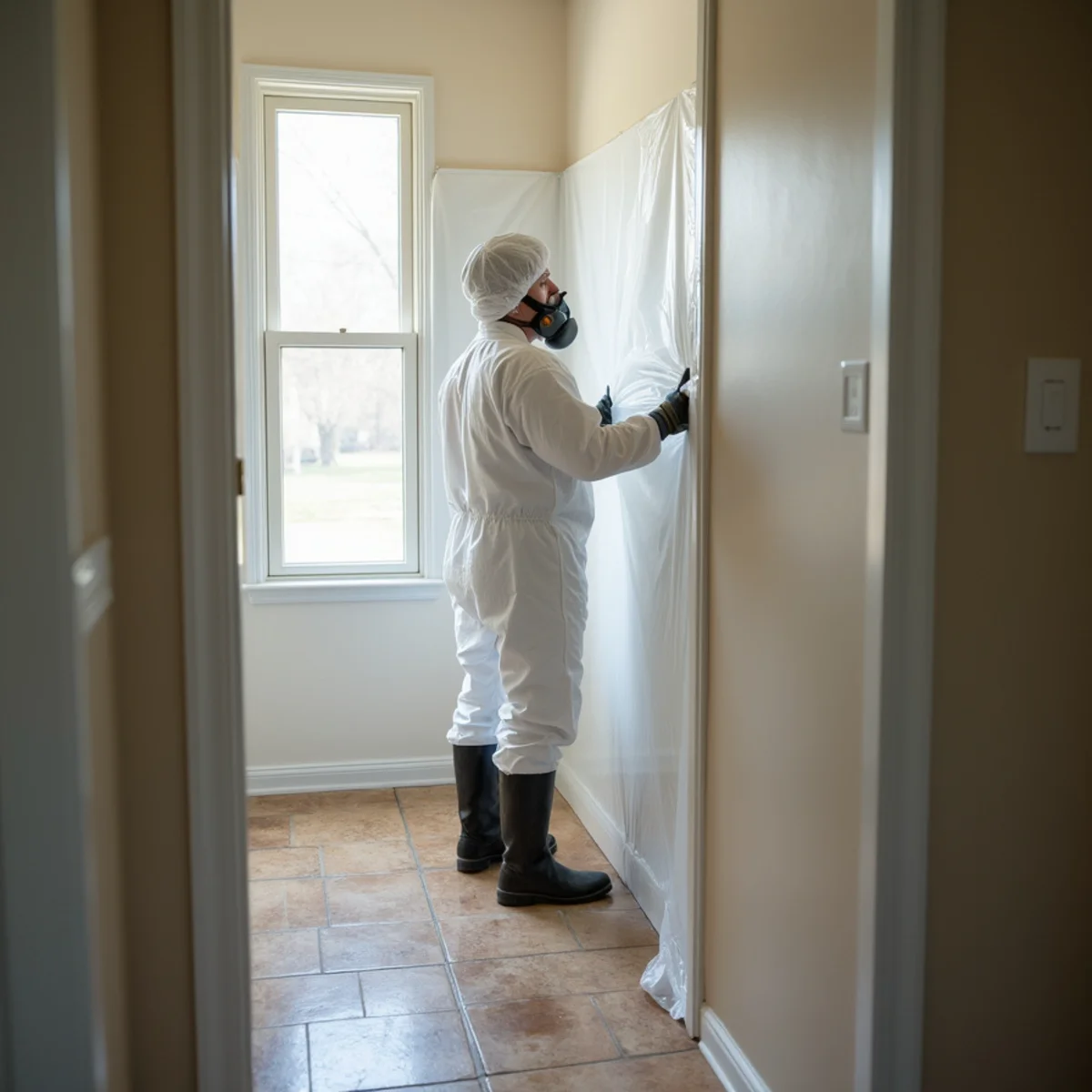
- 1Containment goes up first: plastic sheeting over doorways and, on larger jobs, negative air with HEPA filtration so dust and aerosols stay in the work zone.
- 2Standing sewage is pumped or extracted and disposed of properly.
- 3Porous materials that absorbed sewage come out: carpet and pad, drywall (commonly cut 2 feet above the wet line), baseboards, insulation and particleboard cabinet bases.
- 4Hard surfaces are cleaned with detergent, then disinfected. Antimicrobial treatment follows cleaning; it never replaces removal.
- 5The structure is dried with air movers and LGR dehumidifiers, with moisture readings taken daily until the slab, studs and bottom plates reach a dry standard.
Tile, sealed countertops and metal furniture can usually be cleaned. Carpet, pad, upholstered furniture, mattresses, stuffed toys and paper goods that touched sewage are normally discarded. If the backup came from a second-floor toilet, the ceiling below has to be opened and dried as well; our page on water extraction and structural drying covers how that drying is measured.
Preventing the next one: backwater valves and maintenance
A backwater valve is a one-way valve installed on the lateral. Waste flows out normally, and a flap closes when sewage tries to flow back in from the main. For a home that has backed up during heavy rain, it is the most effective single fix. A licensed plumber installs it, usually under a permit, and it needs periodic cleaning so the flap keeps sealing.
- Have the lateral camera-inspected if drains gurgle or large trees grow near the line
- Wipe grease out of pans and throw it away instead of rinsing it down the sink
- Flush only toilet paper
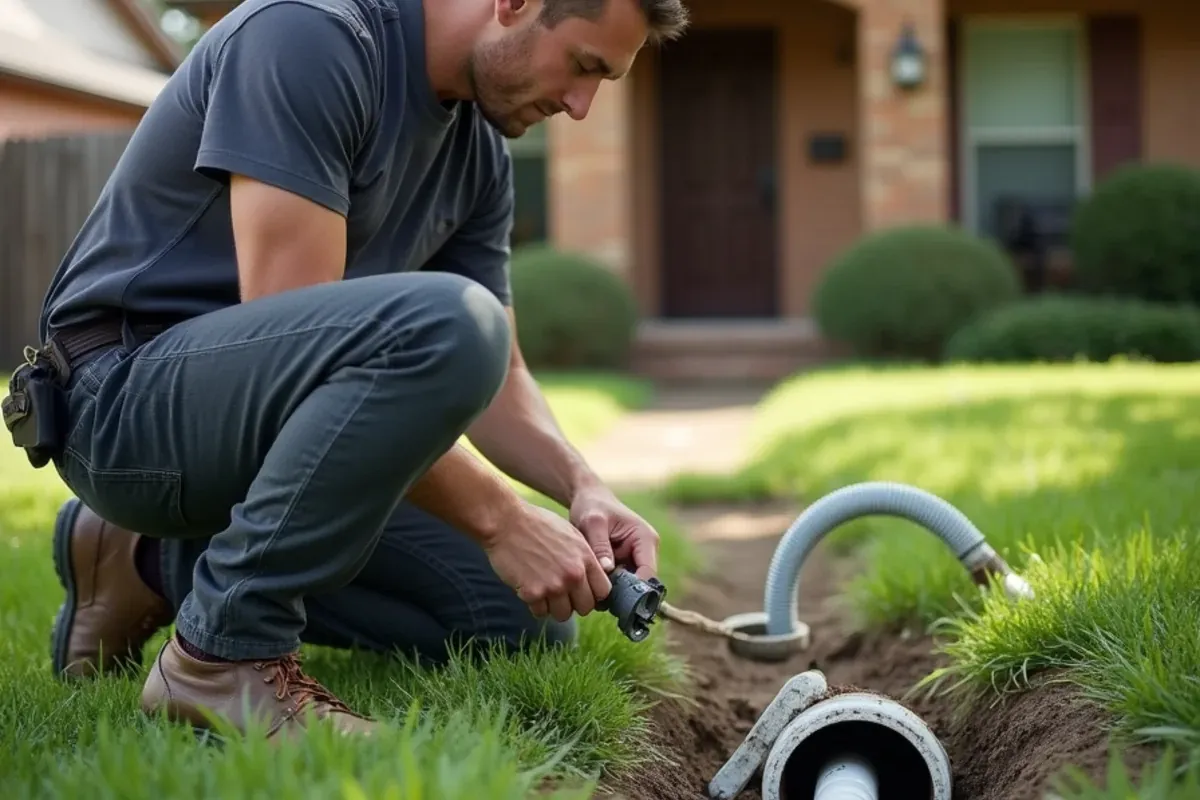
- Keep the cleanout cap visible and clear of mulch and shrubs so a plumber can open it fast
Does insurance cover a sewage backup?
Often only with an endorsement. Many standard Texas homeowners policies exclude water that backs up through sewers or drains unless the policy includes a sewer or water backup endorsement, which usually has its own dollar limit. Check your declarations page for the wording and the limit before you need it. If a general flood caused the backup, a flood policy may be the one that applies. The carrier decides coverage. The crew’s part is documentation: photos, moisture readings, daily drying logs and an itemized scope. Our guide to how Texas homeowners insurance treats water damage goes further.
When to call for sewage cleanup
Call once sewage is on anything you can’t wipe and disinfect in a few minutes. The longer it sits, the further it wicks into drywall and under flooring, and the more material has to come out. Every restoration technician we send is licensed where Texas requires it, and insured. Call (831) 303-1192, 24 hours a day; we confirm timing when you call.
From the job site
What people try to save after a sewage backup, and why it goes
The hardest conversations on a sewage job are about the things that look fine. A rug that only got wet along one edge, a sofa whose legs sat in an inch of water, drywall that seems dry a foot above the stain. Sewage does not stay where it lands: porous materials wick it upward and outward, and what they absorb cannot be reliably disinfected. On Category 3 losses, porous materials the water reached are removed, not cleaned.
Height matters too. Drywall is cut well above the highest wet reading, not at the visible stain line, because wicking carries contamination past what the eye sees. Hard, non-porous items are a different story; most can be cleaned, disinfected and kept.
- Carpet, pad, upholstered furniture bottoms, mattresses on the floor and particleboard furniture that touched sewage are bagged and discarded.
- Solid wood, metal, glass, tile and sealed concrete can usually be cleaned and disinfected.
- Clothing and linens that are machine-washable in hot water may be salvageable; set them aside and ask.
- Photograph every item before it goes into a bag; that list is what a sewer backup endorsement claim is built on.
- A backwater valve on the sewer line, installed by a licensed plumber, is the most direct way to stop the next backup from the main.
Related questions
What should I wear if I have to walk through a sewage-affected room?
Can we sleep in the house while the sewage cleanup is going on?
Will running the air conditioner help dry a sewage backup?
Written by the Hydrosphere Restoration Pros team for homeowners in Katy and nearby communities. General information, not legal, insurance or engineering advice: your policy, the Texas Department of Insurance and licensed professionals have the final word on your situation. Last reviewed September 2026.