
By the Hydrosphere Restoration Pros team · Updated
When floodwater gets into a Katy home, the job is to get the mud and water out, cut away wet drywall and insulation, sanitize what stays, and dry the house completely before anything is rebuilt. Call (831) 303-1192 any hour and we dispatch an insured restoration crew to start the flood damage cleanup.
Flood cleanup is not the same as drying a leak. Water that came in from outside carries soil, sewage and chemicals, so it is treated as Category 3 from the first minute. That changes what can be saved, what protective gear the crew wears, and how every surface is cleaned before drying equipment goes in.
Signs floodwater went further than you can see
Floodwater wicks upward and spreads under floors. Even after it drains, look for these before deciding the damage stops at the puddle line:
- A dirty water line on the walls, with drywall above it that still feels damp or soft
- Mud or silt along the baseboards and under doors in rooms that never had standing water
- Wet carpet or pad in several rooms, or laminate that has started to lift at the seams
- Outlets, floor vents or HVAC returns that sat under the water line
- A sewage or swamp smell that gets stronger as the house warms up
- Water in the garage or at the slab edge after a storm, even with the living areas dry
Why Katy floods: flat prairie, Cane Island Branch, Willow Fork, Mason Creek and the Barker Reservoir pool
Katy sits on flat coastal prairie with very little slope to carry water off. Rain drains slowly through Cane Island Branch, Willow Fork, Mason Creek and Buffalo Bayou toward the Addicks and Barker reservoirs, and when a slow tropical system stalls overhead, streets, ditches and creeks fill faster than they empty.
Hurricane Harvey in August 2017 showed how far that risk reaches. About 685 homes inside the city of Katy flooded, and when the Barker Reservoir pool rose and backed up, every one of the 721 homes in Canyon Gate took water. From the older blocks of Old Katy near the MKT depot to newer sections like Kelliwood and Cane Island, a hard, stalled storm can put water in streets anywhere on this prairie.
We cannot tell you whether a specific address is in a floodplain or the reservoir flood pool. Check the Harris County Flood Control District or Fort Bend County flood maps, or the FEMA Flood Map Service Center, for your property.
Floodwater is contaminated (Category 3): what that changes about cleanup
The IICRC S500 standard classes rising floodwater as Category 3, the most contaminated class of water. It has run through streets, yards and overwhelmed sewer lines, and it can carry bacteria, fuel, pesticides and sewage. Clear-looking floodwater is no safer than muddy water.
- Crews wear gloves, boots, eye protection and respirators, and homeowners should too if they have to go inside.
- Porous materials the water touched, such as carpet, pad, drywall, insulation and upholstered furniture, are generally removed rather than dried.
- Air movers stay off until contaminated debris is out and surfaces are cleaned, so they do not spread contaminated dust through the house.
- Hard surfaces are cleaned first and then treated with an antimicrobial. The antimicrobial follows cleaning and removal; it never replaces them.
The same rules apply when a backed-up drain is part of the problem. Our sewage backup cleanup page covers black water that comes up through the plumbing.
Muck-out and flood cuts: removing wet drywall, insulation and flooring
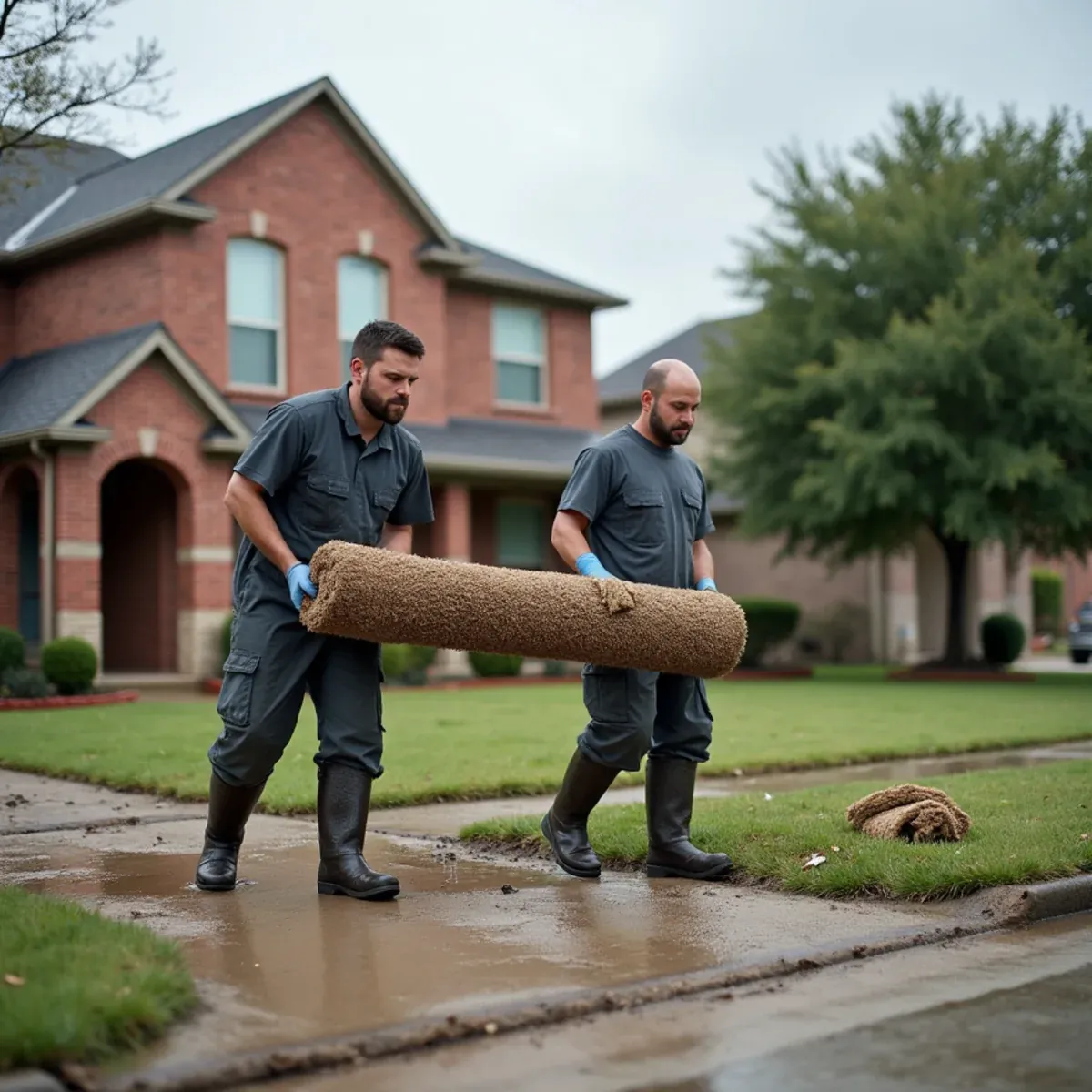
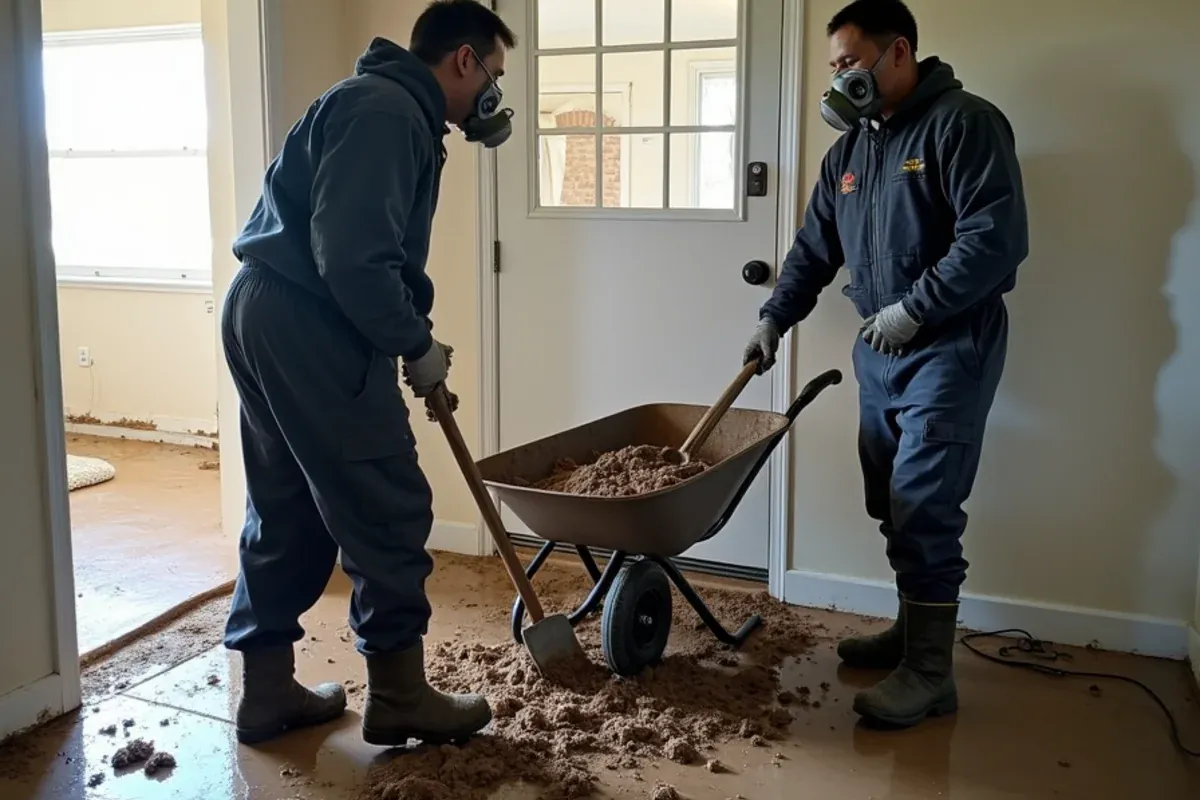
Muck-out is the heavy first stage: shoveling mud, pulling soaked carpet and pad, and hauling out ruined furniture down to the bare slab. Everything is photographed before it goes.
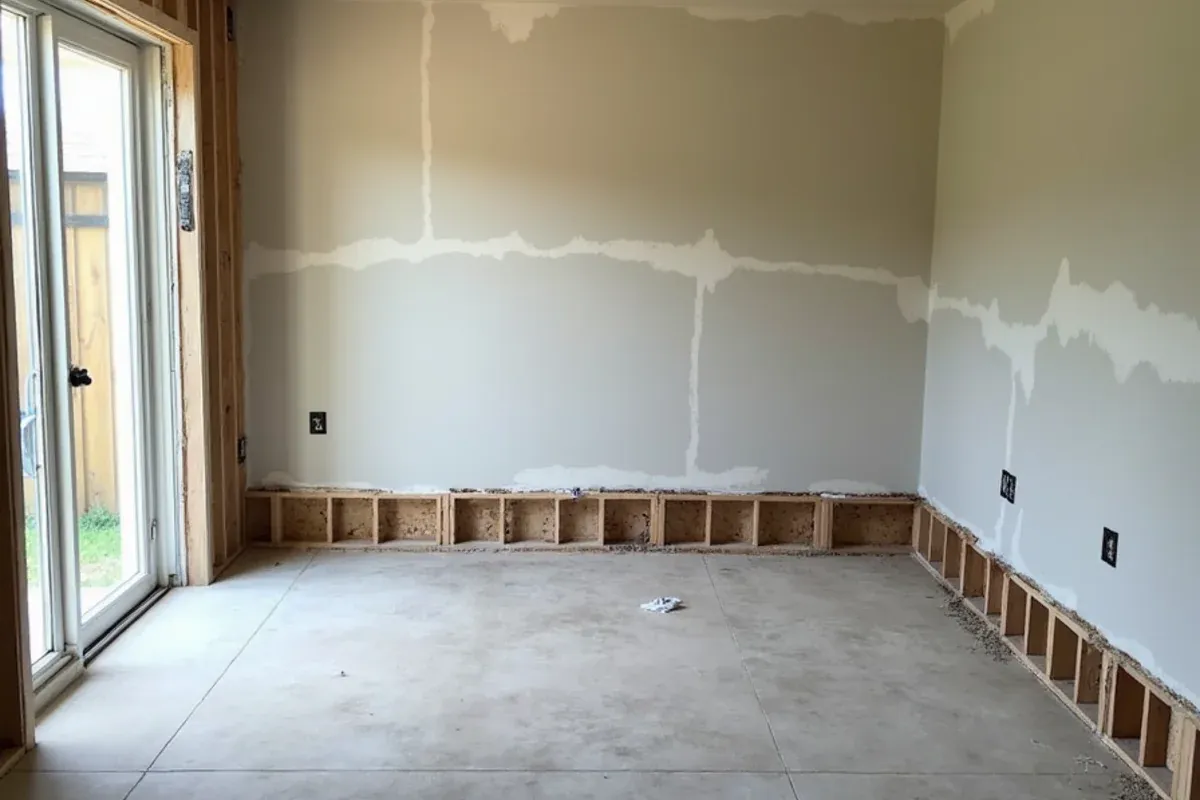
Next come the flood cuts. The crew marks the highest water line on each wall and cuts the drywall in a straight, level line above it, commonly 2 feet or 4 feet above that line depending on how far the water wicked up and its category. Wet batt insulation behind the cut comes out as well, because it holds water against the studs for weeks. Readings above the cut confirm nothing wet is left behind.
- Flooring: carpet and pad are removed; vinyl plank and laminate usually come up so the slab underneath can dry; tile may stay if readings allow.
- Baseboards, door casings and lower cabinets: removed where water reached them, with solid wood set aside if it can be cleaned.
- Contents: porous items that sat in floodwater are photographed, listed and discarded; hard items can be cleaned and kept.
Cleaning, sanitizing and drying studs, sill plates and the slab before any rebuild
Once the wet materials are out, what remains is the frame: studs, the sill plates (bottom plates) anchored to the slab, and the concrete. Each is washed free of silt, cleaned with detergent and treated with an antimicrobial.
Air movers and LGR dehumidifiers run until framing and slab read dry, with readings logged daily. In Gulf Coast humidity this cannot be rushed, and closing walls over studs that still read wet is how mold ends up growing inside a freshly rebuilt wall a few months later. It is the same equipment and method used in water extraction and structural drying, applied after the contamination is gone.
Growth already visible on framing is a separate job. In Texas, remediation of 25 contiguous square feet or more of mold must be done by a TDLR-licensed mold remediation contractor; our mold remediation page explains how that works.
Wind-driven rain and roof leaks after tropical storms
Not every storm loss comes up from the ground. Hurricane Beryl in July 2024 brought roof damage, wind-driven rain and long power outages across the Katy area. That water comes in through missing shingles, lifted flashing, soffit vents and the tops of window frames, soaks attic insulation and runs down inside walls.
Roof water starts cleaner than street flooding but picks up attic dust and insulation on the way down. Long outages make it worse: without power for air conditioning and dehumidifiers, a wet house sits in humid air for days. The first step is often a roof tarp, and crews may need generators to start drying.
Flood insurance and homeowners insurance are two separate claims
This surprises many Katy homeowners. Standard homeowners policies generally exclude damage from rising surface water, which is handled by separate flood insurance through the National Flood Insurance Program (NFIP) or a private flood insurer. Wind and wind-driven rain from the same storm usually falls under the homeowners policy. One hurricane can therefore mean two claims, two adjusters and two deductibles. Check your policies for the details.
New NFIP policies generally carry a 30-day waiting period, so buying coverage when a storm is already in the Gulf usually comes too late. The cost of the cleanup is driven by the factors listed on this page, and both adjusters will want the same thing: proof of what the water did and what was removed. For how this plays out near the reservoirs and the river, read flood insurance vs homeowners insurance near the Barker Reservoir and the Brazos.
Documenting flood damage: photos, water lines, moisture readings, contents list
Good records are the most useful thing a crew leaves behind for a flood claim. Start them yourself if you can do so safely.
- Water lines: photos of the high-water mark on walls, doors and furniture, with a tape measure in the frame.
- Before and after removal: wide shots of each room before muck-out, then again after the flood cuts.
- Moisture readings: the starting moisture map and daily drying logs for studs, plates and slab.
- Contents list: item, room, rough age and a photo, especially for anything thrown out. Keep a carpet and pad sample if your adjuster asks for one.
- Receipts: tarps, fans, hotel nights and anything else you buy to protect the house.
What to do before help arrives: power, gas, safe entry
- 1Stay out if water is still rising or the structure looks damaged, and follow any official evacuation orders.
- 2Never touch the breaker panel while standing in water. If the panel and you are both dry, shut off the main breaker. Otherwise ask the electric utility to cut power at the meter.
- 3If you smell gas, leave and call the gas company from outside. Do not flip switches.
- 4Wear boots and gloves, keep children and pets out, and wash your hands after touching anything the water reached.
- 5Photograph everything before you move or discard it.
- 6Leave the HVAC off if the air handler, ductwork or outdoor unit was under water until it has been checked.
We take flood calls across Katy and the surrounding communities we serve, including Cinco Ranch homes near the Barker Reservoir, Fulshear, where the south side runs toward the Brazos bottomland, and Brookshire, with the Brazos River bottom to its south and west. Our guide to the first hour after water damage is worth reading while you wait.
What’s included in flood damage cleanup
- Photos and measurements of the water line and the contents before anything is moved, for both a flood claim and a homeowners claim
- Muck-out of mud, silt and debris, with protective gear for Category 3 water
- Flood cuts at a measured height above the water line, plus removal of wet insulation, carpet, pad and swollen cabinets
- HEPA air scrubbers while demolition dust and spores are in the air
- Cleaning and antimicrobial treatment of studs, sill plates and the slab after removal, never instead of it
- Drying with air movers and dehumidifiers until framing and slab readings reach dry targets
- A contents list with photos, and a final moisture record before the rebuild starts
Our flood cleanup process
- 1Safe entry. Power and gas are checked or shut off by the utility or an electrician before anyone walks through standing water.
- 2Document first. The crew photographs and measures the water line, the rooms and the contents for your claims.
- 3Muck out and remove. Mud, carpet, pad, wet insulation and drywall below the flood cut come out and are listed.
- 4Clean and treat. Every exposed surface is cleaned, then treated with an antimicrobial.
- 5Dry and verify. Equipment runs with daily readings of studs, sill plates and the slab until they reach dry targets.
- 6Clear for rebuild. You get the final readings, so new drywall only goes over dry framing.
Why choose Hydrosphere Restoration Pros for flood damage cleanup
Two claims, documented separately
Rising water usually goes to a flood policy and wind-driven rain to homeowners. The crew records each source on its own so neither claim is muddied by the other.
Straight talk after a named storm
When a hurricane or tropical storm hits, every crew in the metro is booked. A person still answers 24/7, and we tell you the real start date instead of promising one we cannot keep.
Category 3 handled as Category 3
Protective gear, containment where it is needed, HEPA air scrubbing and removal of porous materials. Every restoration technician we send is licensed where Texas requires it, and insured.
Local flood knowledge, no guesswork
We know the Barker Reservoir pool, the Katy-area creeks and the Brazos. We never tell you whether your address is in a floodplain; we point you to the official county and FEMA maps.
What moves the cost of flood damage cleanup
We don't publish prices we can't stand behind. The technician walks the job, takes readings and gives you an itemized scope before work goes past emergency protection. These are the factors that set the number:
- Height of the water line, which sets how high drywall is cut and how much insulation comes out
- Square footage and number of rooms the floodwater reached
- Amount of mud, silt and debris to muck out and haul away
- Flooring removal: carpet, vinyl plank, laminate or tile over the slab
- Cabinets, vanities and built-ins that sat in floodwater
- Cleaning and antimicrobial treatment of framing and slab across the affected area
- Drying time, which humidity and power outages can extend
- Contents handling: pack-out, cleaning of salvageable items and disposal of ruined ones
More detail: what water damage restoration costs in Katy, TX.
Flood Damage Cleanup around Katy, TX
Flood risk changes block by block around Katy. The eastern edge of Cinco Ranch and Canyon Gate sit beside the Barker Reservoir pool that backed up during Harvey. Brookshire drains through the Brookshire-Katy Drainage District, and the 2016 floods ran from Brookshire east toward Addicks and Barker. Fulshear’s south side slopes toward Brazos bottomland, Mission Bend sits in the Brays Bayou watershed along Keegans Bayou, and in Richmond the Brazos set its record crest of about 55.2 feet during Harvey.