
By the Hydrosphere Restoration Pros team · Updated
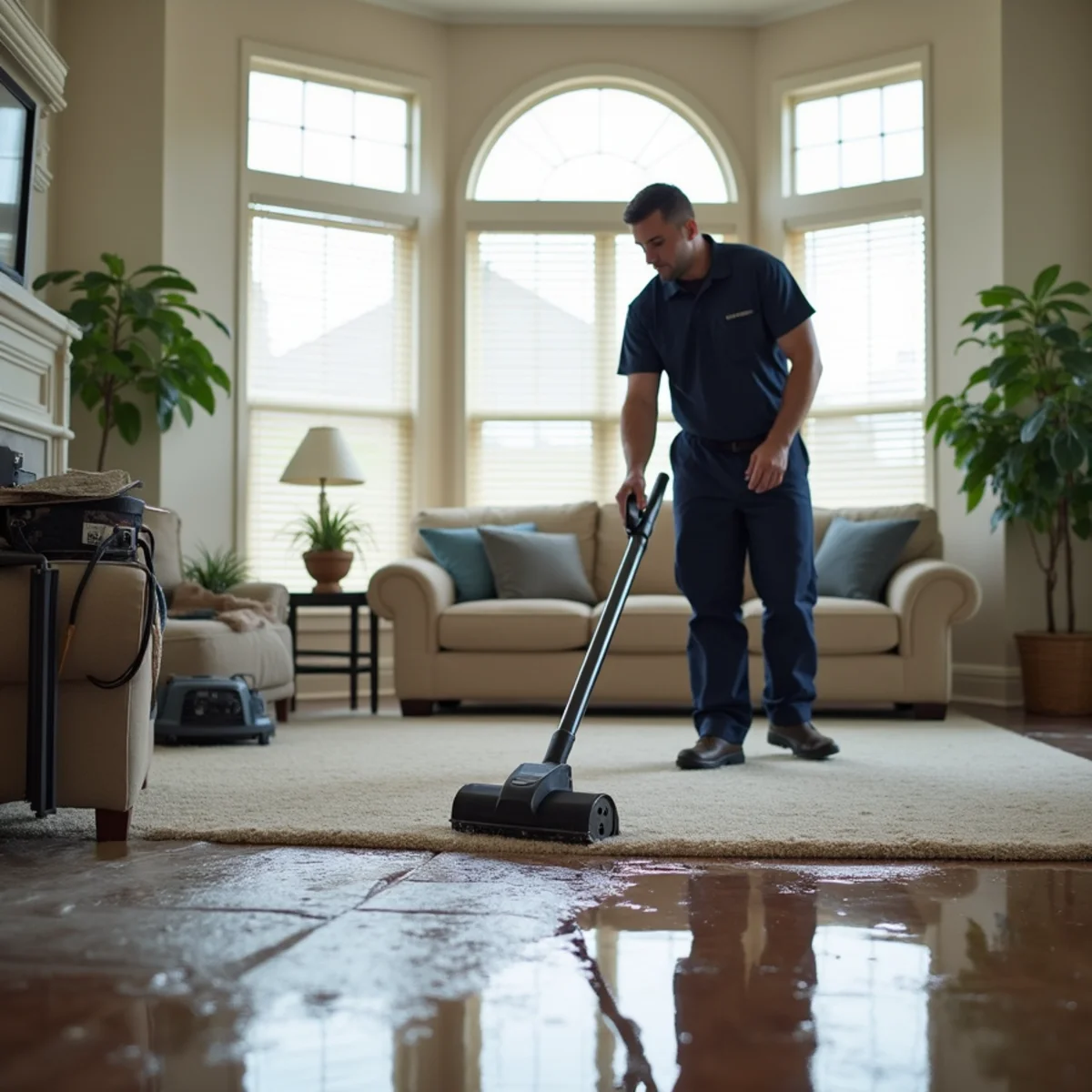
Water extraction in Katy, TX means getting standing water out of carpet, pad, tile and wood quickly, then drying the drywall, framing and slab it has soaked into. Call (831) 303-1192 and we dispatch an insured restoration technician to extract the water, map where the moisture went and set up drying equipment.
Removing the puddle is the easy part. What decides whether a Katy home dries cleanly or grows mold is the moisture you cannot see: water wicking up drywall, trapped under vinyl plank or sitting in the slab. Every job runs on meter readings, and ends only when the numbers say the materials are dry.
When you need water extraction, not just a mop
A wet/dry shop vacuum can handle a small clean spill on tile. It cannot pull water out of carpet pad, the bottom of drywall or a slab, and a day of do-it-yourself drying is a day the 24 to 48 hour mold window keeps running. Call for extraction when any of these show up:
- Standing water on tile, wood or bare slab that towels cannot keep up with
- Carpet that squishes underfoot, or pad that still feels wet the next morning
- Drywall that darkens or softens at the bottom, or baseboards swelling and pulling away
- A ceiling stain or drip below an upstairs bath, laundry room or attic water heater
- Storm water that came in under an exterior door or through a garage entry
- A musty smell days after a leak you thought had dried on its own
Before emergency water removal starts: close the main or fixture shut-off from a dry spot, and switch off power to wet rooms only if the breaker panel is dry. Don’t use a household vacuum on standing water, and don’t run fans or the AC across water that came from a toilet, drain or outside. Photograph every wet room before anything moves. The 24/7 emergency water damage guide has the full first-15-minutes list.
Where the water comes from in Katy homes: supply lines, attic water heaters, AC drain pans, storms
Most homes around Katy are young, with a median build year near 2003, and that brings predictable failures. Supply lines crack at their fittings, washer hoses split, and the tank water heater tucked into the attic of a two-story house eventually rusts through and empties onto the ceiling below.
Air conditioning adds its own water: an attic air handler pulls gallons of condensate from humid Gulf Coast air every summer day, and a clogged drain line sends it into the drywall. Storms bring the rest, from wind-driven rain past roof flashing to street water pushing under doors. Our page on burst pipe and leak water damage covers the plumbing causes in detail.
| Water category | Typical source in a Katy home | What it changes |
|---|---|---|
| Category 1 (clean) | Burst supply line, water heater tank, ice maker line | Carpet and walls can often be dried in place if extraction starts quickly |
| Category 2 (gray) | Washer discharge, dishwasher, AC condensate, or clean water left sitting a day or two | Pad usually comes out; surfaces are cleaned and treated |
| Category 3 (black) | Sewage, a toilet overflow with waste, floodwater from outside | Porous materials in the wet area are removed; the crew works in protective gear with containment |
Water extraction: truck-mounted and portable units, carpet and pad, tile and wood floors
Every gallon pulled out with a vacuum is a gallon the dehumidifiers never have to strip from the air.
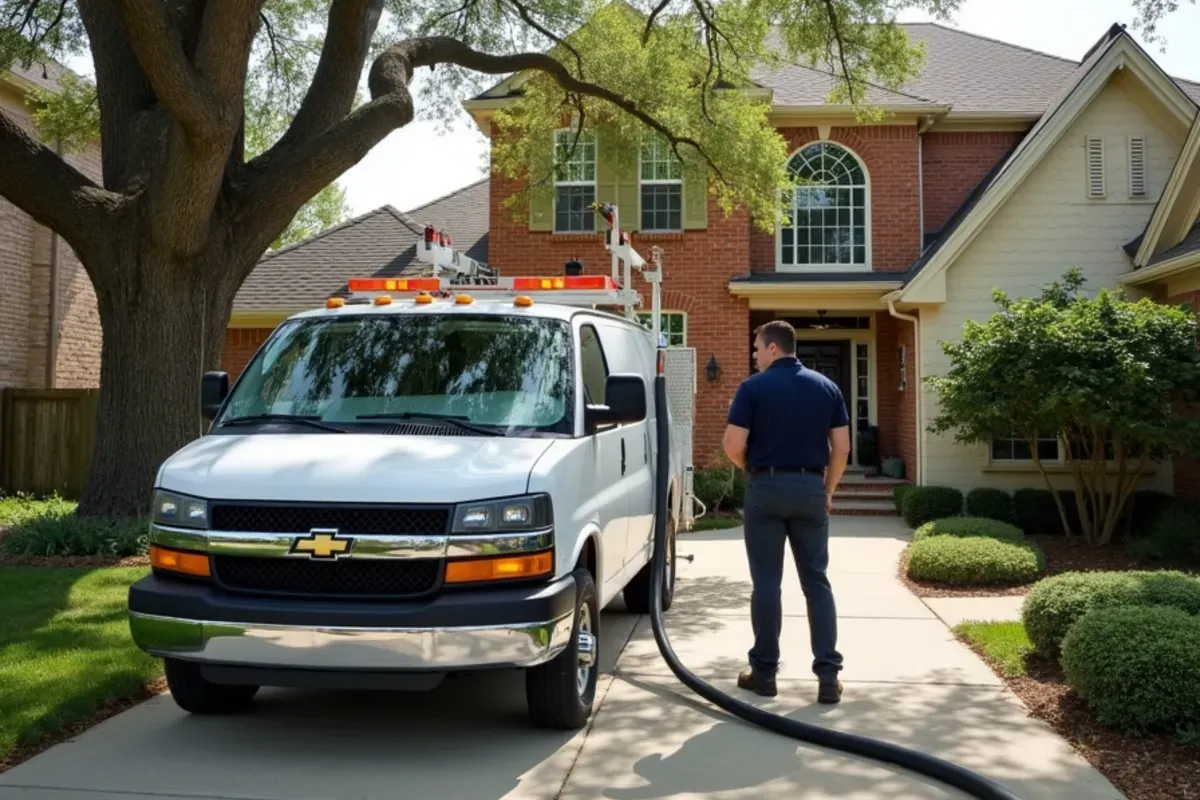
- Truck-mounted extractors run from the service vehicle and move large volumes fast, suited to whole-floor losses and storm water.
- Portable extractors reach upstairs bedrooms, apartments along I-10 and rooms far from the driveway.
- Weighted extraction tools ride on wet carpet and press water out of the pad, often the difference between saving carpet and replacing it.
- Squeegee wands and wet vacuums handle tile, sealed concrete and laminate, where water slips under the baseboards.
Hardwood needs a gentler plan. Technicians may lay panel-style floor drying systems that draw moisture up through the boards, and cupping that appears on day one can relax as the wood dries.
Moisture mapping: meters and thermal imaging behind walls and under flooring
Before equipment goes in, the technician sketches each wet room with readings at marked points, so everyone can see how far the water traveled.
- Pin and pinless moisture meters read drywall, baseboards, cabinet toe kicks and subfloor against a dry reference spot in the same house.
- Thermal imaging cameras show cool patterns where water sits behind paint or under flooring. The image is a lead; the meter confirms it.
- Thermo-hygrometers record temperature and relative humidity, which sets the dehumidification plan.
Mapping often finds water nobody suspected, like a first-floor ceiling under an upstairs bath that looks normal but reads saturated.
Where the technician checks in a Katy home
- Slab edges and flooring transitions, where water under tile or vinyl plank reaches the bottom of the walls
- Thresholds and exterior doors after a storm, where rain on flat, clay-soil lots pushes in at floor level
- Attic insulation and ceiling drywall after an overhead leak from an attic water heater or supply line
- Lower-floor ceilings and walls below upstairs bathrooms and laundry rooms
- Cabinet toe kicks, behind appliances and around the AC closet, where water hides under finished surfaces
Structural drying: air movers, dehumidifiers and daily readings
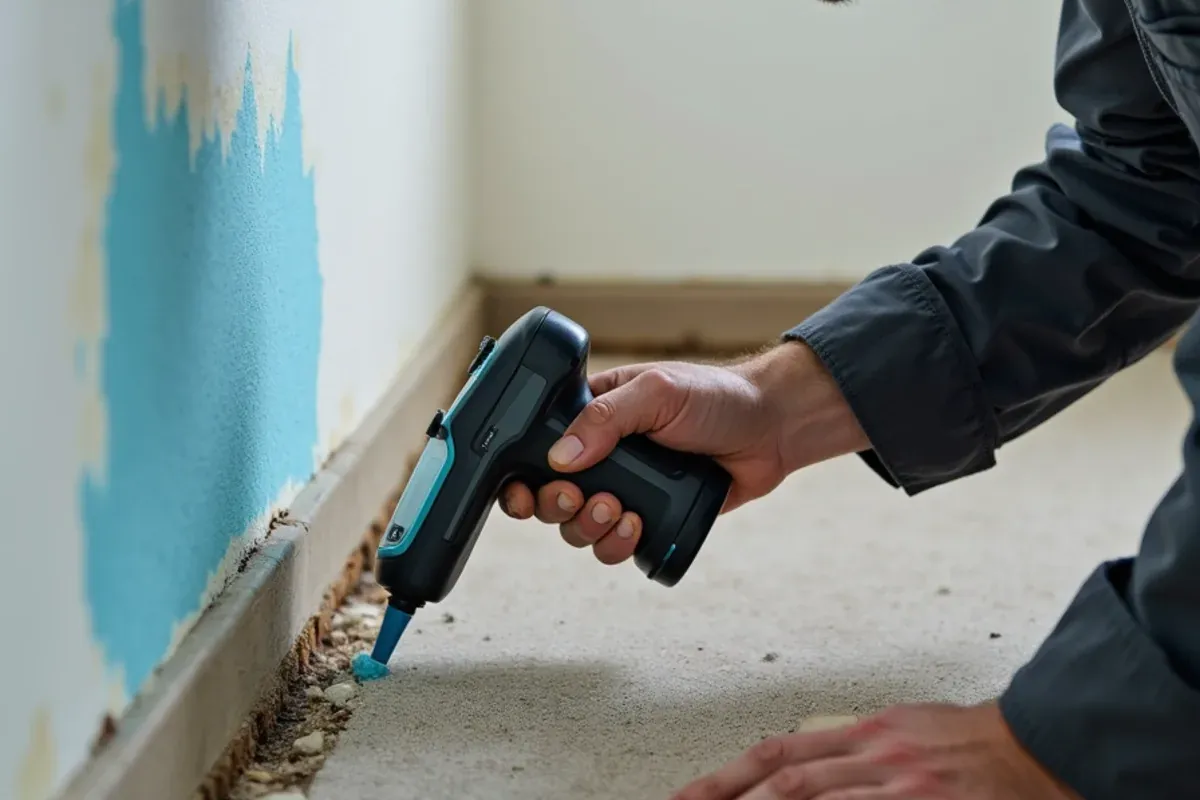
Structural drying moves moisture out of wet materials into the air, then pulls it out of the air before it soaks back in. Air movers blow low across wet surfaces, and low-grain refrigerant (LGR) dehumidifiers remove that moisture even in humid air. Soaked walls may get small holes behind the baseboard so dry air can be pushed into the cavity.
Psychrometrics, in plain English
Psychrometrics is the measurement of air temperature, relative humidity and how much water the air is carrying, which technicians track in grains per pound. Each visit, the technician reads the air in the wet rooms, outdoors and at the dehumidifier exhaust. If the exhaust air is not much drier than the room, the setup is not working and gets changed. That daily verification follows the IICRC S500 standard; equipment sitting in a room is not proof the structure is drying.
- 1Equipment is placed to match the wet area, materials and water category. Fans never run across contaminated water.
- 2The technician takes readings at every mapped point each day and records them in a drying log.
- 3Equipment is moved, added or pulled as readings change.
- 4Drying ends when materials read at or near the dry reference, not after a set number of days.
Those logs prove the house actually dried, and they form the backbone of a claim file.
What can be saved and what comes out (carpet pad, baseboards, drywall, cabinets, hardwood)
Save what can be dried to a safe level and remove what cannot. In a clean-water loss caught early, that usually means:
- Carpet is often dried and re-stretched. Pad holds water like a sponge and is commonly replaced.
- Baseboards made of MDF swell and are replaced; painted solid wood can often be dried and reinstalled.
- Drywall wet a few inches up is usually dried in place. Drywall soaked high, sagging or hit by contaminated water is cut out.
- Cabinets with swollen particleboard do not recover. Solid wood cabinets can often be saved by pulling the toe kick and drying underneath.
- Hardwood often recovers with floor drying systems and time. Laminate is less forgiving.
- Contents are photographed first. Furniture is set on foam blocks so legs do not wick water or stain the carpet, and rooms too full to dry are packed out, with every item listed.
Anything touched by sewage or floodwater follows stricter rules, and whatever is removed is photographed and listed first.
Why drying takes longer in Gulf Coast humidity and how slab floors hide water
Katy summers push outdoor humidity high enough that opening windows makes drying worse, so the house stays closed and dehumidified. The EPA advises drying water-damaged materials within 24 to 48 hours to prevent mold growth, and in August that window feels short. If growth has already started, mold remediation after water damage is a separate, licensed job in Texas.
Nearly every home here also sits on a concrete slab poured on clay. Water under tile, vinyl plank or carpet sits on that slab with nowhere to go, and the bottom plates of the walls wick it up. Concrete gives up moisture slowly, so flooring laid over a slab that still reads wet can cup or grow mold weeks later.
From first call to dry: the visit timeline
- 1The call. We answer 24/7, ask what is wet and whether water is still running, and tell you what to do meanwhile. We confirm timing when you call.
- 2Safety check. The technician confirms the source is stopped, checks for electrical hazards and assigns the water category.
- 3Photos and a scope. You approve what will be extracted, removed and dried before work starts.
- 4Extraction and removal. Standing water comes out, then any pad, baseboard or drywall that cannot be dried.
- 5Drying. Equipment goes in and daily readings begin. A clean-water loss caught early commonly dries in three to five days; hardwood, cabinets and slabs take longer.
- 6Final readings. At dry targets the equipment comes out and you keep the records.
What your dry-out record should include
- The moisture map, with every reading point marked by room and material
- Daily readings of materials and of air temperature and humidity
- An equipment log: what was placed, how many, where, and the dates in and out
- Photos of anything removed and the reason it could not be dried
- Final readings compared with the dry reference taken in an unaffected part of the house
- Any area that could not be reached or tested, noted as an exclusion rather than called dry
Keep it with your claim file. It is also what the flooring installer, the next contractor or a future buyer will ask for.
Katy is the center of our coverage, from Cane Island to Firethorne and the older streets downtown. We also handle water extraction in Cinco Ranch, drying for newer homes in Fulshear and homes and businesses in Brookshire; see all areas we serve. If water is still coming in, start with our 24/7 emergency water damage guide.
Every restoration technician we send is licensed where Texas requires it, and insured.
What affects the cost, and how insurers treat sudden leaks
No honest price exists before someone sees the loss, so the technician writes a scope before work begins. Cost follows the drivers listed on this page: wet area, water category, removal and drying days. Our guide to water damage restoration cost in Katy walks through each one.
Mitigation first, rebuild second
Ask for a written scope that lists rooms and materials and splits emergency water mitigation (extraction, removal, drying and monitoring) from reconstruction (new drywall, paint, baseboards, flooring and cabinets). Mitigation happens now. The rebuild waits for dry readings and is often priced separately. An estimate describes the work; it is not a coverage decision. For how carriers look at it, read does homeowners insurance cover water damage in Texas.
Most Texas homeowners policies are written to cover sudden and accidental water, like a burst supply line, and to exclude slow leaks, wear and tear, and rising floodwater. Your carrier decides. The crew keeps the file complete: dated photos, moisture maps, daily drying logs and an itemized scope. To see why delays cost more, read how fast mold grows after a leak in Houston-area humidity.
What’s included in water extraction and drying
- A source and safety check, with the water category written on the job record
- Extraction with truck-mounted or portable units, weighted carpet tools and, for deep standing water, a submersible pump
- A moisture map of every affected room, built with pin and pinless meters and thermal imaging
- Controlled removal of pad, baseboards or drywall that cannot be dried, photographed before it goes
- Air movers, LGR dehumidifiers and, where needed, wall-cavity or hardwood floor drying systems
- Daily visits with material and air readings, and equipment moved or added as the numbers change
- Furniture set on blocks, contents moved or packed out, and antimicrobial on cleaned surfaces when the water category calls for it
- Final readings, the equipment log and the photos, gathered in one file for your adjuster
Why choose Hydrosphere Restoration Pros for water extraction and drying
A person picks up, any hour
Extraction works best in the first hours. A live person answers (831) 303-1192 around the clock, walks you through the shut-off, and starts dispatch on the same call.
Drying you can check
The moisture map and daily readings are yours to see. Equipment stays until materials hit their dry targets and leaves on the numbers, not on a calendar.
Insured crews, plain licensing talk
Every restoration technician we send is licensed where Texas requires it, and insured. We tell you what Texas does and does not license instead of flashing a badge.
A file built for the adjuster
Photos before anything moves, the category, readings, equipment dates and an itemized scope. We document the loss; we never offer to waive a deductible or promise what the carrier will pay.
What moves the cost of water extraction and drying
We don't publish prices we can't stand behind. The technician walks the job, takes readings and gives you an itemized scope before work goes past emergency protection. These are the factors that set the number:
- Square footage of wet flooring, walls and ceilings, and how many floors the water reached
- Water category: clean supply water is simpler to handle than gray water or sewage-contaminated water
- Materials that must be removed and hauled away, such as carpet pad, baseboards, drywall or swollen cabinets
- Flooring type: carpet dries faster than hardwood, and water under tile or vinyl plank is harder to reach
- Number of air movers and dehumidifiers and how many days they run
- Hidden moisture in wall cavities and under cabinets that calls for specialty drying
- Moving, blocking or packing out furniture and contents that fill the wet rooms
- Rebuild work after drying, such as drywall, paint, baseboards and flooring
More detail: what water damage restoration costs in Katy, TX.
Water Extraction and Drying around Katy, TX
Most extraction calls come from Katy itself, from Old Katy near the MKT depot to Cane Island and Elyson, and the same crews cover the ring around it. Each area has its own pattern: Cinco Ranch two-stories bring ceiling-to-floor jobs under attic water heaters, Fulshear’s new builds bring supply-line and upstairs-laundry leaks, Brookshire brings storm water at the door and older rental plumbing, Mission Bend brings slab leaks under 1980s carpet, and Richmond brings river water as well as leaks in its newer subdivisions.