
By the Hydrosphere Restoration Pros team · Updated
If a pipe has burst or a water heater is leaking in your Katy home, close the main water shut-off first, then call (831) 303-1192. We dispatch an insured restoration technician to clean up the burst pipe water damage: extract the water, open up what has to come out, and dry every ceiling, wall and floor the leak reached.
Leaks here tend to start high. Many two-story homes around Katy have the water heater, air handler and supply lines in the attic, so a failure runs through the insulation, drops through the ceiling and can soak both floors before anyone notices. The cleanup has to follow the water all the way down.
Signs of burst pipe water damage you cannot see yet
A pipe that splits in the attic or inside a wall can run for hours before water shows. In Katy homes, watch for these, and if two of them show up together, close the main and call:
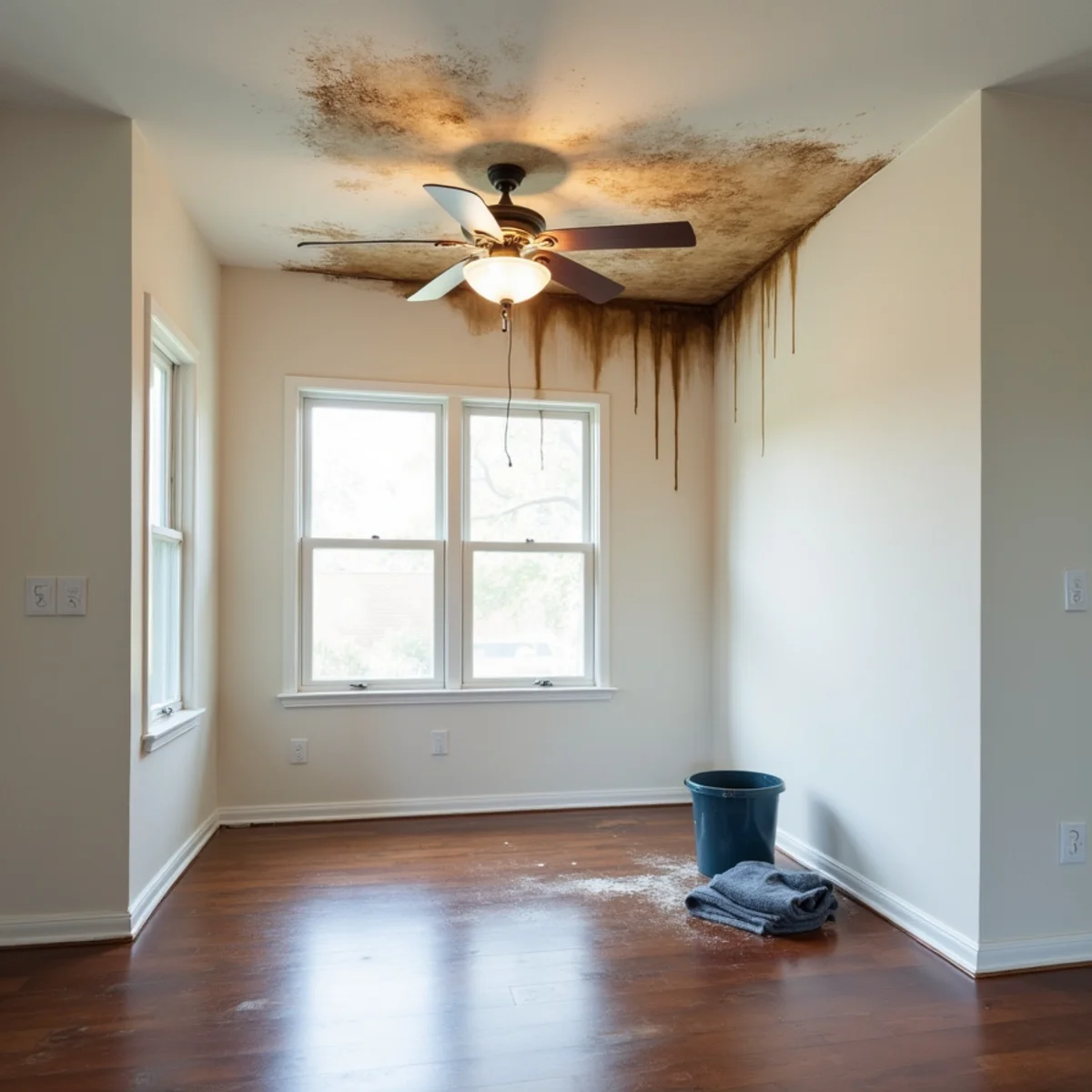
- A yellow or brown ceiling stain that grows, or drips at a light fixture or smoke detector
- Drywall that bulges, softens or feels cool to the touch below a bathroom or attic line
- The meter dial in the box by the street still turning with every fixture off
- A water bill that jumps with no change in use, or the sound of running water at night
- A warm spot on a tile or wood floor, a common sign of a hot-water slab leak
- Low pressure at one fixture, or a musty smell in a closet that backs up to plumbing
First steps: the main shut-off at the meter box, the breaker panel, the water heater
Stopping the water is the most useful thing you can do first.
- 1Close the main valve. Many Katy homes have a house-side shut-off in the garage, near the water heater closet or in a small box along the front foundation. Failing that, the valve in the meter box near the curb closes with a quarter turn using a meter key or wrench.
- 2Cut power to wet areas at the breaker panel, but only if you can reach the panel without standing in water.
- 3Deal with the water heater. Turn the gas control off or switch off its breaker, then close the cold-water valve on top of the tank. Go into the attic only if the ladder and decking are dry and safe.
- 4Drain the lines. Open a faucet on the lowest floor, then photograph the damage before you move anything.
Attic water heater and supply line failures: why two-story Katy homes flood from the top down
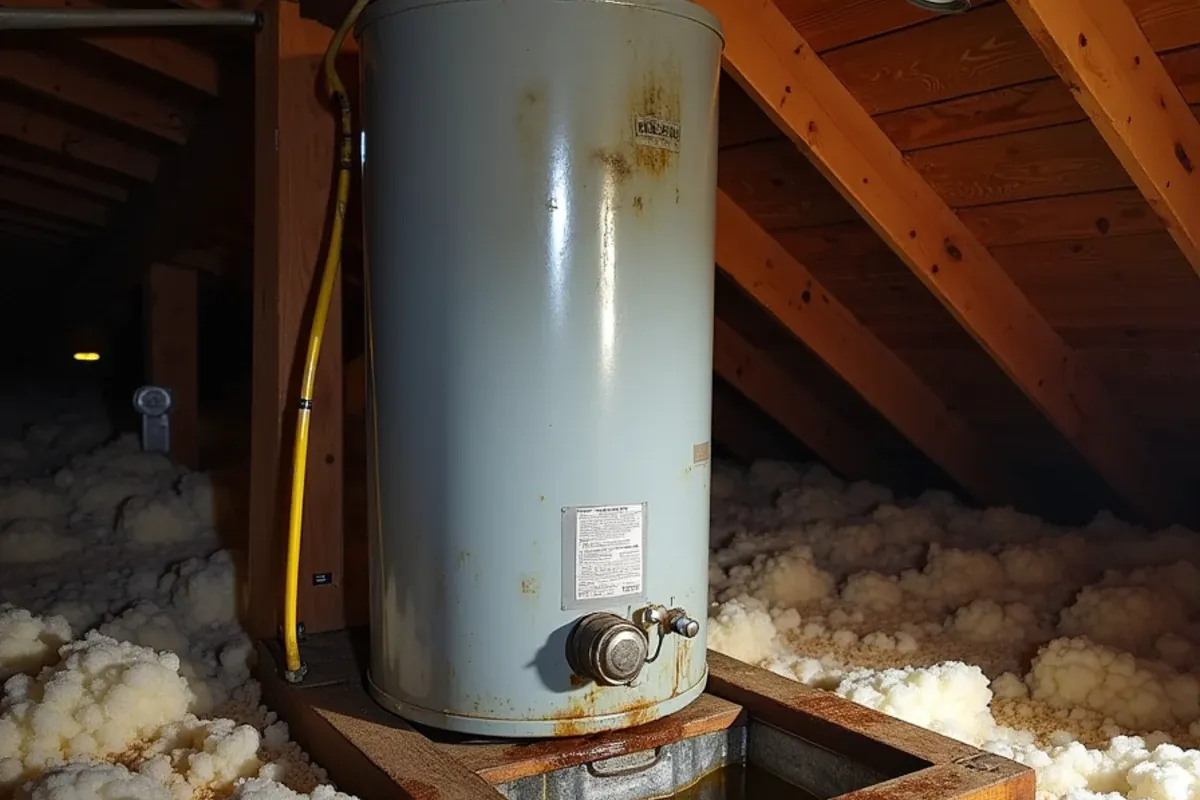
Putting the water heater and air handler in the attic saved builders floor space, and many two-story homes around Katy were built that way. The trade-off comes when a tank that has run a decade or more rusts through. The drain pan is meant for a slow drip; a failed tank or split supply line sends water past it, into the insulation and through the ceiling below.
By the time a stain appears, water has often run along joists and down inside walls to the first floor. In established neighborhoods such as Kelliwood and Nottingham Country, many homes are on their second or third water heater. Our article on attic water heater leaks and why Katy ceilings come down covers warning signs and prevention.
| Leak source | Warning signs | First move |
|---|---|---|
| Attic water heater | Rusty water, drips from a ceiling vent or light | Close the cold supply and gas or power, then the main |
| Attic air handler and condensate line | Water around ceiling vents, an AC that shuts off on its float switch | Turn the system off at the thermostat |
| Toilet or sink supply line | Water at the toilet base or under the vanity, a hissing sound | Close the small valve behind the fixture |
| Washing machine hose | Water spreading from the laundry room into the next room | Close the valves behind the washer or the main |
| Refrigerator or ice maker line | Soft or swollen flooring near the fridge, a damp cabinet base | Close the ice maker valve, often under the sink or behind the fridge |
| Slab leak | A warm spot in the floor, a meter that turns with fixtures off | Close the main and call a licensed plumber |
Frozen pipe breaks: what the February 2021 freeze taught Katy homeowners
Houston-area houses are built for heat. When the February 2021 freeze held temperatures below freezing for days and the power went out, water lines in attics and exterior walls froze across the region. Many split only at the thaw, so homeowners found water pouring through ceilings a day or two after the worst cold.
The lessons were plain. Find the main shut-off before a freeze. Insulate attic lines and drip faucets on exterior walls when a hard freeze is forecast. At the thaw, walk every room and look up: a bulging ceiling or a wet ring around a light fixture often means a split line above.
Ceiling water damage: sagging drywall, wet insulation and safe removal
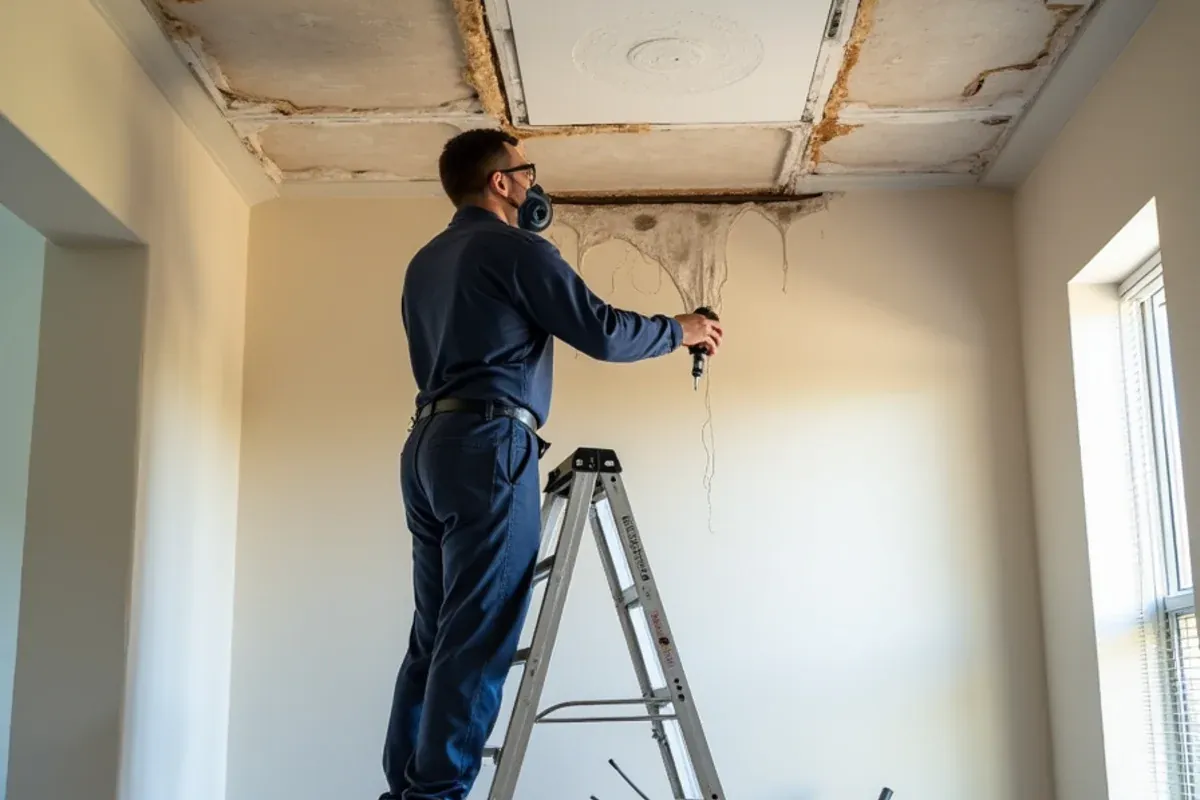
A ceiling holding water is heavy, and saturated drywall topped with wet insulation can let go with little warning. Keep people and pets out, move what you can from underneath, and switch off that room’s lights and fans at the breaker.
On site, the technician checks the ceiling with a moisture meter and thermal camera and removes only the saturated or sagging sections. Wet insulation above is bagged and taken out, since it holds water against the drywall and rarely dries well in place. Ceilings that got wet but kept their shape can often be dried from the attic side and below.
Appliance and fixture leaks: washer hoses, fridge lines, toilet supply lines, AC condensate pans
A washing machine overflow can cover a floor in minutes, but slow leaks do as much harm: a fridge line dripping under laminate for weeks, or an attic condensate pan overflowing every humid afternoon.
- Washers: rubber fill hoses crack with age, and upstairs laundry rooms send overflow into the ceiling below.
- Refrigerators and dishwashers: water tracks under cabinets and swells particleboard.
- Toilets: a cracked supply line is clean water, but an overflowing bowl is treated as contaminated.
- AC leaks: algae clogs the condensate line, the pan fills, and water spills into the ceiling.
Slab leak water damage under tile, wood and carpet
A slab leak is a break in a water line under or through the concrete foundation. Katy slabs sit on expansive clay that swells in wet months and shrinks in drought, which can stress pipes over time. The first clues are usually a warm spot in the floor or damp carpet with no visible source.
A licensed plumber finds and repairs the leak, often by rerouting the line through the walls or attic instead of breaking the slab. The restoration side dries what the water reached: lifting carpet and pad, pulling baseboards, checking the bottom of the walls and drying the slab surface. Tile and glued-down wood over a wet slab need careful readings before anyone decides they must come up.
Drying walls, ceilings and cabinets, and what gets rebuilt
Drying after a burst pipe follows the same method as any water extraction and structural drying job: extract, map the moisture, set air movers and dehumidifiers, and read daily. Cabinets get their toe kicks pulled so air reaches underneath, and wet wall cavities can be dried through small holes behind the baseboard.
Whatever comes out is photographed and measured first, so the rebuild scope of drywall, texture, paint, baseboards and sometimes insulation or cabinets matches what was removed. The drying records also show the rebuild contractor the framing was dry before walls were closed.
We take leak calls across Katy and the communities we serve nearby, including attic water heater leaks in Cinco Ranch, supply line and upstairs laundry failures in Fulshear and older homes and rentals in Brookshire. If water is still running, go to our emergency water damage page. If a slow leak has grown mold, mold remediation goes to a TDLR-licensed contractor.
Insurance: sudden and accidental leaks vs long-term seepage
Most Texas homeowners policies turn on one distinction. Water that escapes suddenly and accidentally, like a pipe that splits in a freeze, is commonly covered. Damage from a leak that seeped for weeks, from wear and tear, or from a known problem left alone is commonly excluded. Many policies also pay for the resulting damage but not the failed pipe or water heater itself. Read your policy; the carrier decides.
Cost follows the factors listed on this page, above all how far the water spread and how many floors it reached. The crew’s role on a claim is documentation: dated photos, moisture readings, daily drying logs and an itemized scope. Our guide to whether homeowners insurance covers water damage in Texas explains the common exclusions.
What’s included in burst pipe water damage cleanup
- Coordination with a licensed plumber for the pipe repair, since drying cannot finish while the line still leaks
- A moisture map of both floors, following the water from the attic or wall cavity down to the slab
- Safe removal of saturated ceiling drywall and wet insulation, photographed before it comes down
- Extraction of standing water from carpet, tile and wood, plus toe-kick removal to dry under cabinets
- Hardwood floor drying mats where boards can be saved, and wall-cavity drying where drywall can stay
- Daily readings and an equipment log until every mapped point reaches its dry target
- A claim file with photos, the moisture map, logs and an itemized scope. Keep the failed part for the adjuster
Our burst pipe cleanup process
- 1Stop and secure. You close the main or the fixture valve; the technician confirms it holds, checks for live electrical hazards and deals with any sagging ceiling before anyone walks under it.
- 2Plumbing repair. A licensed plumber fixes the break. We can help coordinate so drying starts the moment the line is sound.
- 3Map two floors. Meters and thermal imaging trace the water from the attic or wall down through ceilings, walls and the slab.
- 4Extract and open up. Standing water comes out, then ceiling drywall, insulation, pad or baseboards that cannot be dried.
- 5Dry and verify. Air movers and dehumidifiers run with daily readings until the numbers reach dry targets.
- 6Hand off for rebuild. You get the final readings and the file, so drywall, paint and flooring go back over a dry structure.
Why choose Hydrosphere Restoration Pros for burst pipe and leak water damage
We know where plumbing ends
Texas licenses plumbers separately from restoration work. We tell you which crew does what and schedule the drying around the pipe repair instead of leaving you to sort it out.
Both floors, not just the stain
Attic leaks in two-story Katy homes soak the ceiling, the upstairs floor and the walls below. The moisture map follows the water all the way down before anything is closed up.
A live answer during a freeze
Pipes split during a hard freeze and flood at the thaw, often overnight. A person answers (831) 303-1192 around the clock and walks you to the shut-off while dispatch starts.
Insured, and honest about the paperwork
Every restoration technician we send is licensed where Texas requires it, and insured. We document the sudden break for your adjuster and never promise what the carrier will pay.
What moves the cost of burst pipe and leak water damage
We don't publish prices we can't stand behind. The technician walks the job, takes readings and gives you an itemized scope before work goes past emergency protection. These are the factors that set the number:
- How many floors the water reached; an attic leak in a two-story home often means two ceilings and two sets of walls
- Ceiling drywall and wet insulation that must be cut out and bagged
- Water category: a clean supply line leak versus an overflowing toilet or washer discharge
- Flooring type, and whether water got under tile, laminate or glued-down wood on the slab
- Cabinets and vanities that need toe-kick removal, drying or replacement
- Number of drying days and pieces of equipment
- Access: cramped attics or rooms full of furniture
- Rebuild scope after drying, such as drywall, texture, paint, baseboards and insulation
More detail: what water damage restoration costs in Katy, TX.
Burst Pipe and Leak Water Damage around Katy, TX
Burst pipes look different across the area. In Katy and Cinco Ranch, the usual culprit is an attic water heater or supply line in a 1990s or 2000s two-story. Fulshear’s newer homes see fittings and upstairs laundry hoses fail early. Mission Bend’s early-1980s slab homes are due for slab leaks and tired supply lines, and some homes from that era were plumbed with polybutylene. Brookshire’s older core has exterior-wall runs that freeze first, and Richmond’s newer subdivisions see the same attic failures as Katy.