
By the Hydrosphere Restoration Pros team · Updated
Fire damage restoration in Katy, TX starts before any cleaning: securing the house with board-up and roof tarps, pulling out the water firefighters left behind, and keeping soot from setting into surfaces. Call (831) 303-1192 any hour once the fire department has released the property, and we will send an insured restoration technician to secure it and scope the work.
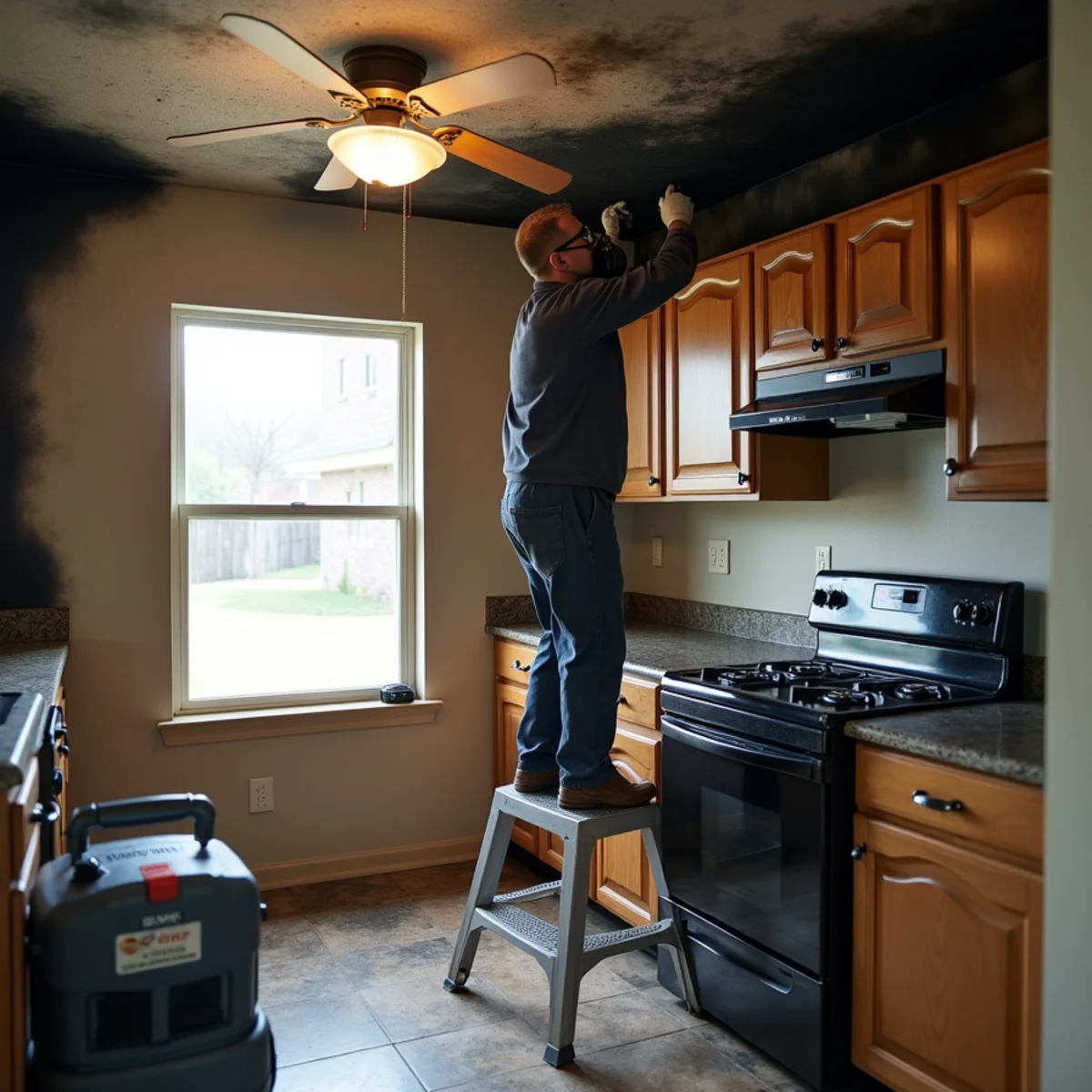
Most house fires stay in a kitchen, a garage or part of the attic, but smoke travels through the whole house. The residue type (dry smoke, wet smoke or kitchen protein) decides how each surface is cleaned and whether the smell returns on the first humid day.
Signs smoke damage spread past the fire room
A kitchen fire that the fire department called small can still leave residue in every room. Check for these before deciding cleanup can stay in one area:
- A gray or yellow film on walls and ceilings in rooms far from the fire
- Black cobweb-like strands (soot tags) in ceiling corners and along light fixtures
- Blackened AC filters, or soot around supply vents and return grilles
- Smoke odor inside closed closets, drawers and mattresses
- Smell that comes back on humid days or when the AC kicks on
- Discolored plastics, tarnished metal fixtures, or soot marks around outlets and switch plates
The first 24 hours after a fire: safety, board-up and roof tarping
Don’t go back inside until the fire department says it is safe. Even after a small fire, ceilings can be heavy with water and wiring near the fire may be damaged. Your electric and gas providers may need to inspect before service is restored.
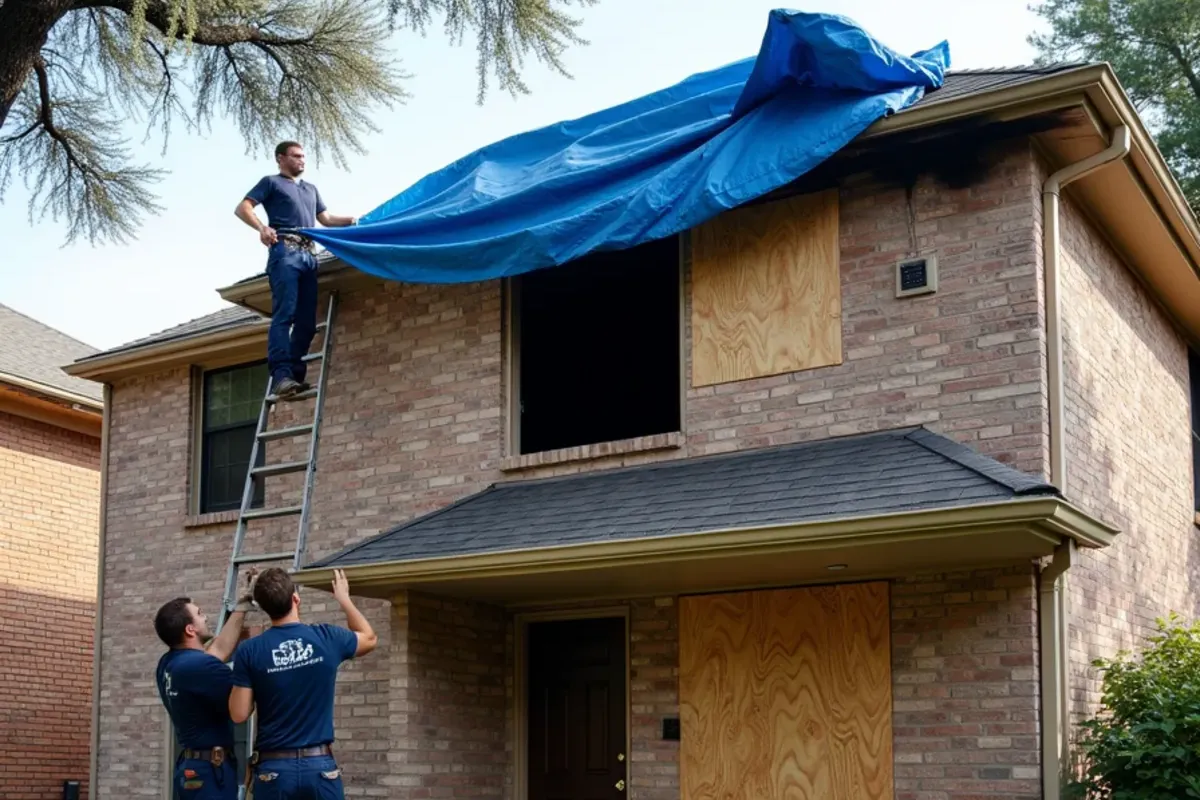
Then the priority is protecting the house from weather and trespassers. A board up service covers broken or forced windows and doors, and roof tarping covers holes cut for ventilation before the next Gulf Coast thunderstorm.
- Plywood over broken windows, doors and vent openings, fastened from the inside where possible
- Heavy tarps over roof openings, battened down so wind can’t peel them back
- Photos of every opening before it is covered, for your insurer
Collect medications, IDs and papers if you can reach them safely. Don’t turn on the HVAC; it pulls soot into every room.
Water from firefighting: extraction and drying come first
One hose line can put hundreds of gallons into a house in minutes. That water soaks carpet, drywall and insulation and mixes with soot. It has to come out first, and fast, because damp materials in Katy humidity can grow mold within 24 to 48 hours.
Crews extract standing water, remove soaked materials that can’t be saved, and set air movers and LGR dehumidifiers with daily readings, as in any water extraction and structural drying job. If water sat for days, the crew checks wall cavities and refers growth of 25 contiguous square feet or more to a licensed mold remediation contractor.
Water damage from putting out a covered fire is generally part of the fire loss, but confirm with your carrier. See homeowners insurance and water damage in Texas.
Soot and smoke residue: dry smoke, wet smoke and kitchen protein residue
What burned, and how hot, determines the residue on your walls, and the wrong method smears it deeper into paint. Soot removal starts with identifying the kind.
| Residue | Typical source | What it looks like | How it is cleaned |
|---|---|---|---|
| Dry smoke | Fast, hot fires burning wood, paper and fabric | Powdery gray-black film that smears easily | HEPA vacuuming, then dry chemical sponges before any wet cleaning |
| Wet smoke | Slow, smoldering fires burning plastics, rubber and foam | Sticky, dark and smeary, with a sharp odor | Degreasing cleaners and more agitation; often needs sealing |
| Protein residue | Kitchen fires involving meat, grease or food left on the stove | Nearly invisible yellowish film that discolors paint and cabinets | Degreasers and enzyme or solvent cleaners; odor is the main challenge |
| Fuel and oil soot | Garage fires involving gasoline, motor oil, vehicles or batteries | Dense, black and oily | Solvent cleaning; porous items are often a loss |
Crews work top down, with HEPA air scrubbers catching fine particles stirred up during smoke damage cleanup. Surfaces that won’t come fully clean are sealed with an odor-blocking primer.
Smoke odor removal: cleaning, sealing and air scrubbing
Smoke odor removal works only after the residue is gone; deodorizer over soot fades, then humidity brings the smell back. The order is clean, remove, seal, then treat the air.
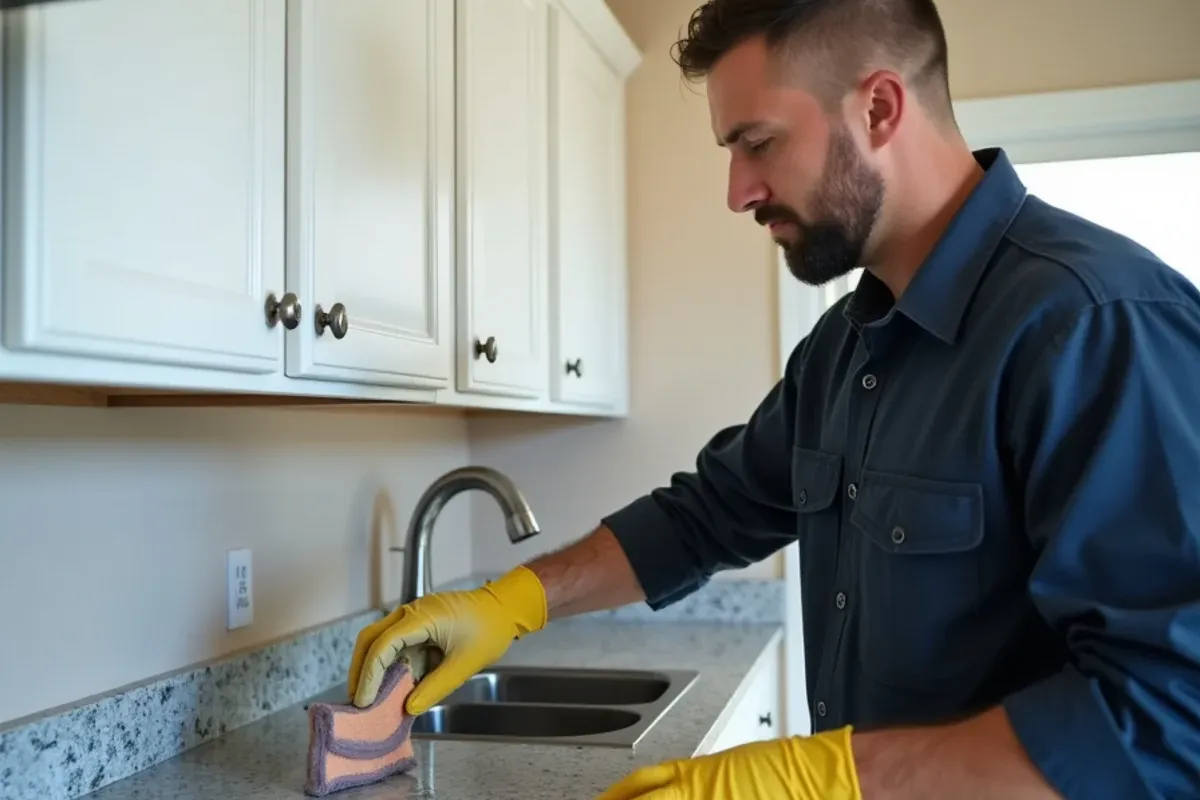
- Cleaning and removal. Soot comes off every surface, inside cabinets and fixtures too, and heavily smoked drywall and insulation come out.
- Sealing. Cleaned framing, subfloor and attic decking in the burn area get a shellac-based or odor-blocking sealer.
- HVAC cleaning. Ductwork and the air handler, often in the attic here, are cleaned so they don’t keep spreading odor.
- Thermal fogging. A heated deodorizer is fogged so it reaches the same cracks and cavities the smoke did. The home is empty while fogging runs.
- Hydroxyl generators. These break down odor molecules and are commonly used while people are in the home.
- Ozone generators. Ozone works but is harmful to breathe, so it is used only in unoccupied spaces, with people, pets and plants kept out until the area has aired out.
Kitchen, garage and attic fires: how the damage differs
Kitchen fires
Cooking is the leading cause of home fires nationally. Kitchen fire cleanup usually means protein residue across much of the house even when flames stayed on the stove wall, so cabinets, bedrooms and closets may all need cleaning.
Garage fires
Attached garages in subdivisions such as Firethorne hold dryers, freezers, water heaters, fuel cans, and chargers for tools and e-bikes. Garage fires burn plastics and fuel, leaving heavy wet-smoke and oily residue, and smoke pushes into the house through the connecting door and the attic above.
Attic fires
Attic fires often start at HVAC equipment, bath fans, recessed lights or wiring, and can burn unnoticed for a while. Damage lands on the roof deck above and the ceilings below, which take smoke and firefighting water. In older homes, such as those in Old Katy near the MKT depot, a licensed electrician should check the wiring before power is restored.
Outages add risk. When Hurricane Beryl left much of the Houston area without power for days in July 2024, portable generators ran across the region. Fire officials warn against running one in a garage, refueling a hot engine, and overloading extension cords.
Contents: what can be cleaned and what is a loss
Many belongings can be saved if they are pulled away from soot and humidity early. In a contents pack-out, the crew photographs and inventories items room by room and moves them off-site for cleaning while the structure is repaired.
- Usually cleanable: hard furniture, dishes, glass, metal, most clothing and linens, framed art, and many electronics after professional cleaning
- Often a loss: food and medicine exposed to heat or smoke, cosmetics, heavily smoked mattresses and pillows, melted plastics, and anything charred
- Case by case: upholstered furniture, rugs, books, papers and photos, which may respond to specialized cleaning and deodorizing
Throw nothing away until it has been photographed and listed. Items that can’t be cleaned are still part of your claim.
Working with your adjuster: scope, photos and inventory
Your adjuster decides what the policy pays. The crew’s job is a clear record: dated photos of every room, moisture readings, an itemized scope, and the contents inventory.
We don’t negotiate claims or promise coverage. Texas law bars a contractor from acting as a public adjuster on a job it is repairing and from waiving a deductible. If you want someone to argue your claim, that is a licensed public adjuster or an attorney. What we make sure of is that the documentation is complete when your adjuster asks for it.
Fire calls come in from across our service areas around Katy, including larger two-story homes in Cinco Ranch, new master-planned communities in Fulshear, and homes and small businesses in Brookshire.
What’s included in fire and smoke damage restoration
- Emergency board-up of broken windows and doors, and roof tarping where the fire or firefighters opened the roof
- Extraction and drying of the water used to put the fire out, before soot cleaning starts
- Test cleaning to identify dry, wet or protein residue and pick the right method
- Dry-chemical sponges and HEPA vacuuming first, then wet cleaning of walls, ceilings and cabinets
- Contents pack-out, cleaning and a room-by-room inventory with photos for your adjuster
- Odor control with air scrubbers, hydroxyl generators or thermal fogging, and ozone only in an empty house
- Removal of charred or unsalvageable materials, and sealing of smoke-stained framing before rebuild
Our fire damage restoration process
- 1Release and secure. Once the fire department releases the property, the crew boards up openings and tarps the roof.
- 2Water out first. Firefighting water is extracted and drying starts, because wet soot and soaked drywall only get worse.
- 3Assess the residue. Test cleaning in each area shows which method removes the soot without spreading it.
- 4Pack out and inventory. Salvageable contents are listed, photographed and moved for cleaning; losses are documented.
- 5Clean the structure. Walls, ceilings and cabinets are cleaned, and charred materials are removed.
- 6Deodorize and seal. Odor is treated at the source, then smoke-stained framing is sealed before rebuild.
- 7Final odor check. The house is checked closed up and with the AC running before contents come back.
Why choose Hydrosphere Restoration Pros for fire and smoke damage restoration
The water side is our specialty
Most fires leave more water damage than burn damage. Extraction and drying start first, so soot cleaning is not fighting wet drywall.
Honest about odor
Smoke smell leaves for good only when the residue source is removed or sealed. We tell you what a treatment can and cannot do instead of promising a spray will fix it.
An inventory the adjuster can use
Room-by-room photos, a contents list and an itemized scope. We document the loss; we do not negotiate your claim or promise what the carrier will pay.
Answered around the clock by insured crews
Call (831) 303-1192 any hour once the property is released. Every restoration technician we send is licensed where Texas requires it, and insured.
What moves the cost of fire and smoke damage restoration
We don't publish prices we can't stand behind. The technician walks the job, takes readings and gives you an itemized scope before work goes past emergency protection. These are the factors that set the number:
- Size of the fire and how far smoke traveled through the house
- Type of residue: dry smoke cleans faster than wet smoke, protein film or fuel soot
- How much firefighting water went in and how long drying takes
- Board-up and roof tarping, including the number and size of openings
- Burned or smoked materials removed and hauled away, such as drywall, insulation and flooring
- Cleaning of the ductwork and air handler
- Contents pack-out, off-site cleaning, storage and inventory
- The odor treatment method and how many rounds it takes
More detail: what water damage restoration costs in Katy, TX.
Fire and Smoke Damage Restoration around Katy, TX
Fire calls around Katy follow the housing. Kitchen fires are the most common everywhere. Garage fires hit homes where the water heater, dryer and freezer share the garage, and attic fires follow HVAC or wiring problems in two-story Cinco Ranch and Fulshear homes. In older homes in Brookshire’s core and near historic downtown Richmond, have a licensed electrician check wiring before power goes back on. After Hurricane Beryl’s long outages, generator placement became part of the conversation across Mission Bend and the whole area.